Discovered in 1992, the N-arachidonoylethanolamide or anandamide is a neurotransmitter derived from arachidonic acid, a polyunsaturated omega-6 fatty acid. Anandamide is one of the most important of the Endocannabinoids, the compounds produced within the body that bind to cannabinoid receptors in the brain and elsewhere.
While Anandamide and 2‑arachidonoylglycerol interact with each other to regulate certain processes, it is 2‑arachidonoylglycerol that is believed to regulate the transmission of signals across synapses in the brain. Growing evidence shows that 2-AG is involved in the pathogenesis of various shocks and atherosclerosis. It is also responsible for regulating food intake and energy metabolism, and modulating anxiety and depression. In addition, 2-arachidonoylglycerol is a proven mediator of inflammatory reactions and immune responses, and it can reduce pain.
Tetrahydrocannabinolic Acid (THC-A) Like other acid cannabinoids, it is not psychoactive. Further, THC-A is anti-inflammatory, anti-tumour, encourages appetite, combats insomnia and is antispasmodic.
CBD-A) is both anti-inflammatory and anti-tumour
One of the three compounds synthesized by the Cannabis plant, CBC-A is anti-inflammatory, weakly anti-fungal and strongly anti-bacterial.
Cannabigerolic acid is considered to be the ‘mother’ of all Cannabinoids. Transformed by the mother plant into all the other cannabinoids, it is the direct parent compound of CBG, a rare neuro-regenerative medicinal compound.

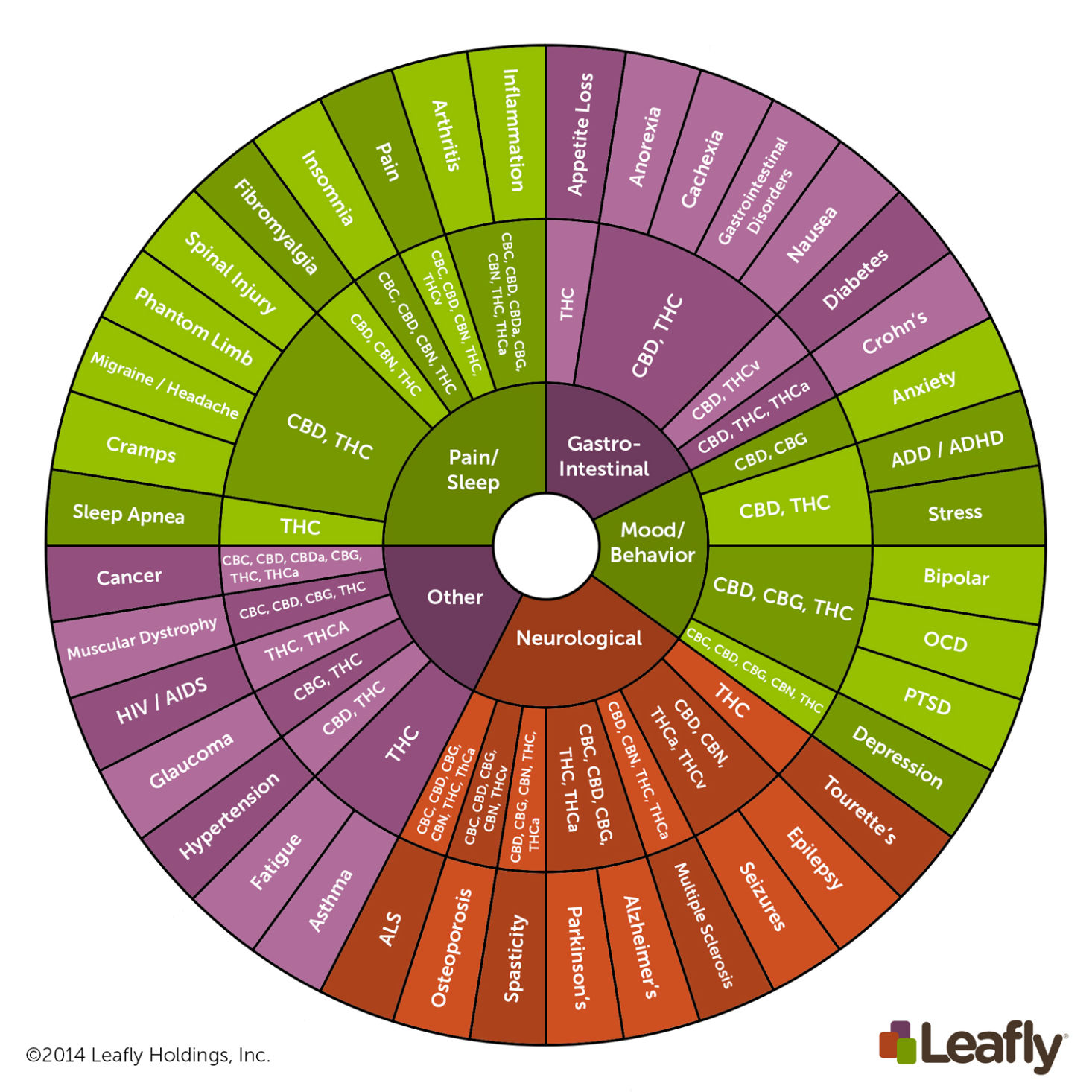
The discovery of THC led scientists to discover the Endocannabinoid System in humans and other vertebrate animals, a critical aspect of physiology that, up until then, was unknown. THC is effective in the treatment of a variety of ailments and disorders including pain, tumours, nausea and ADHD /ADD
Some other benefits of THC include:
1) Excellent sleep aid
2) Pain Relief
3) Eases Nausea and vomiting
4) Increases Appetite
5) Enhances senses
6) Anti-Inflammatory
7) Antioxidant
8) Bronchodilator
9) Anti-tumor agent
10) Muscle relaxant
11) Anticonvulsant
Is “non-psychoactive” in that it does not produce the euphoria, time dilation or anxiety characterised by THC. CBD as well as some other phytocannabinoids has the ability to dampen the effects of THC. In the full extract, CBD has been valuable in the treatment of seizure disorders such as MS (multiple sclerosis) and epilepsy, and it is often as effective as THC in the management of pain and tumours. CBD also lowers blood sugar, is used to treat Diabetes, and because of its calming effect, is useful for treating stress-related disorders and insomnia.
Some other benefits of CBD are:
1) Alleviate Cancer-Related Symptoms
2) Neuroprotective Properties
3) Heart Health
4) Relieve Pain
5) Reduce Anxiety and Depression
Cannabichromene is non-psychoactive and about 10 times more effective than CBD in treating anxiety and stress. It also displays efficiency in treating inflammation and alleviating pain, stimulating the growth of bone tissue, and it is both anti-viral and anti-tumour.
Some other benefits of CBC are:
1) Antimicrobial / Anti-Viral
2) Anti-inflammatory
3) Analgesic
4) Anti-Depressant
5) Migraines
Cannabigerol displays neuroprotective effects with Huntington’s, therapeutically as an antidepressant and as a painkiller. CBG’s antibacterial effects can alter the overall effects of cannabis. CBG is known to kill or slow bacterial growth, reduce inflammation, inhibit cell growth in tumour/cancer cells, and promote bone growth..
Some other benefits of CBG are:
1) Anti fungal effects
2) Useful in treatment of psoriasis
3) Helps fight breast cancer
4) Good for skin conditions
This is an oxidation product of THC, normally formed when THC is exposed to oxygen and heat. CBN is the most sedative of all the Cannabinoids so it’s useful in the treatment of sleep disorders. It is also somewhat effective as an anti-emetic and anticonvulsant.
Some other benefits of CBN
1) Relieves pain
2) Aids with sleep
3) Promotes bone growth
4) Reduces inflammation
5) Inhibits cancer cell growth
THCV doesn’t begin as cannabigerolic acid (CBGa). THCV is created from the break down of cannabigerovarin acid (CBGVA). Tetrahydrocannabivarin (THCV) is actually an antagonist (a type of receptor that blocks or dampens agonist-mediated responses rather than provoking a biological response itself upon binding to a receptor) of the CB1 and CB2 receptors.
Some other benefits of THCV are:
1) Appetite suppressant
2) Regulate blood sugar levels
3) Reduces panic attacks
4) Stimulates bone growth
5) Anti-convulsive